


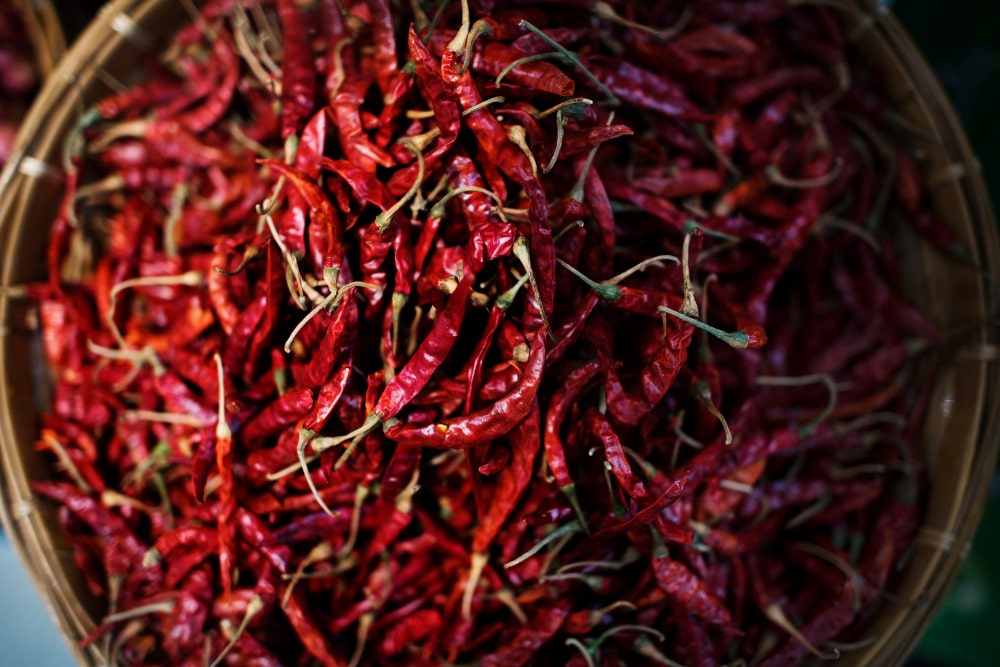
Across foodservice, ingredient-supply chains, snack manufacturers, and spice traders, one trend has moved from niche to mainstream: the increasing appetite for organic and dehydrated chillies. What started as a speciality ingredient for health-conscious consumers has evolved into a strategic commodity for businesses seeking clean-label, shelf-stable, and flavourful inputs. This post explains why demand is rising, who’s buying, what supply looks like, how businesses can respond, and what challenges to expect plus five practical FAQs at the end.
Why organic and dehydrated chillies are in demand
1. Clean-label and health-forward product trends
Brands across segments sauces, ready meals, snacks, ethnic foods, and condiments are under pressure to reduce artificial additives and list recognizable ingredients. Organic certification signals fewer synthetic pesticides and inputs, meeting both regulatory requirements in some markets and consumer perception of “safer” food. Dehydrated chillies offer concentrated flavour without preservatives, enabling manufacturers to deliver intense heat and colour while keeping ingredient lists simple.
2. Stability and supply-chain efficiency
Dehydration drastically extends shelf life compared with fresh chillies, removing the need for cold chain logistics and cutting spoilage. For B2B buyers, that translates into predictable inventory, lower freight costs, and the ability to source larger volumes in single shipments. Mills, spice blenders, and private-label food manufacturers favour dehydrated forms (whole, flakes, or powders) because they integrate easily into automated production lines.
3. Flavour intensity and versatility
Dehydrated chillies preserve and concentrate capsaicin and flavour compounds. Manufacturers can use them for colour (paprika variants), smoky notes (smoked chillies), fruity heat (certain dried varieties), or pure spiciness. That flexibility is invaluable for product development teams seeking to differentiate taste profiles across markets.
4. Globalization of cuisines
International cuisines Mexican, Indian, Southeast Asian, and African continue to expand in global retail and foodservice. Demand from restaurant chains, ready-meal manufacturers, and export markets drives bulk purchases of region-specific organic dried chillies to capture authentic flavours.
5. Regulatory and retailer push
Large retailers and global food companies increasingly require suppliers to meet pesticide-residue standards and prefer certified organic or integrated pest management sources to reduce compliance risk. Similarly, food-safety standards (GMP, HACCP, and sometimes GFSI-benchmarked schemes) mean traceability and consistent processing methods are highly valued.
Who’s buying B2B demand segments
- Ingredient traders and spice brokers: Buying bulk to supply regional spice houses and retailers.
- Food manufacturers: Sauces, ready meals, snack seasonings, soups, and marinades use dehydrated chillies as base flavour.
- Private-label producers: Supermarkets expanding clean-label ranges require organic inputs.
- Foodservice & catering groups: Chain kitchens appreciate longer shelf life and consistent heat/palatability.
- Exporters and wholesalers: Sourcing region-specific varieties for diaspora communities and specialty stores.
- Cosmetic and wellness companies: Occasionally use capsicum extracts for topical formulations (more niche and tightly regulated).
Sourcing & quality considerations for buyers
Certification and traceability
Buyers increasingly insist on third-party organic certification (USDA Organic, EU Organic, JAS, etc.), and they seek full traceability from farm to pack. Traceability mitigates food-safety risks and simplifies audits.
Variety and grade selection
Chilli varieties differ in heat (Scoville units), flavours, colour, oil content, and appearance. Buyers must specify variety (e.g., cayenne, ancho, guajillo, bird’s eye, Kashmiri) and grade (whole pods, flakes, powder, puree base) to meet product specifications. Colour and pungency assays are often required.
Moisture content & microbial safety
Dehydrated chillies should meet specified moisture levels to avoid mould and aflatoxin risk. Reputable suppliers conduct moisture testing, aflatoxin screening, and microbial analysis, and follow hygienic drying practices.
Processing methods
Hot-air drying, sun drying, and smoke drying affect flavour and consumer perception. Hot-air drying is common for consistency; smoked chillies command a premium. Buyers should confirm whether chillies were treated (e.g., steam sterilization) and how processing affects active compounds.
Packaging & shelf life
Business customers need packaging options compatible with their operations: bulk sacks (jute, woven polypropylene with liners), vacuum-sealed pouches for private label, or drum packs for extracts. Modified atmosphere packaging (MAP) and oxygen absorbers can extend shelf life for powders and flakes.
Opportunities for suppliers and exporters
Premiumization
Organic and specialty dehydrated chillies command higher margins than conventional commodities. Suppliers who invest in organic conversion, reliable drying infrastructure, and certification can access premium buyer segments.
Value-added products
Beyond raw dried chillies, processors can offer blended spice mixes, standardized heat/pungency batches, freeze-dried options for high flavour retention, and private-label packing services that attract food manufacturers and retailers.
Vertical integration & contract farming
Securing supply through contract farming reduces volatility. Suppliers collaborating with farmers on organic practices can guarantee quality, yield, and traceability appealing to large B2B buyers.
Sustainability storytelling
Sustainable farming practices, farmer welfare programs, and carbon-reducing drying/processing methods strengthen brand positioning with retailers and end-consumers who care about ESG.
Challenges and risks
1. Conversion and certification costs
Farmers and processors face costs and time lag to convert to organic certification. Smaller producers may need financial and technical support to make the transition feasible.
2. Climatic variability
Chillies are sensitive to weather; droughts, floods, or unexpected pests affect yields and quality. Dehydration reduces seasonality for processors, but raw-material shortages still raise prices.
3. Quality inconsistency
Variations in drying techniques and post-harvest handling cause inconsistent colour, flavour, and contamination risks. Buyers often perform pre-shipment inspections and require samples for analysis.
4. Regulatory and trade barriers
Different markets have varying maximum residue limits (MRLs), organic recognition rules, and import paperwork. Navigating cross-border certification acceptance requires expertise.
5. Price volatility and adulteration
High demand can lead to adulteration or mixing of cheaper varieties. Thorough lab testing for capsaicinoid profiles, colorants, and foreign materials is essential for buyers to protect brand integrity.
Practical tips for B2B buyers and suppliers
For buyers
- Request certificates, COAs, and recent lab results (moisture, aflatoxin, pesticide residues).
- Insist on samples and conduct bench tests for flavour, colour, and heat level in your intended application.
- Build relationships with suppliers who offer traceability and contract-farming partnerships.
- Consider longer-term contracts to secure volume and stabilize prices.
For suppliers/processors
- Invest in reliable drying systems and quality-control labs.
- Support farmers through training and partial financing during organic conversion.
- Offer graded SKUs (colour grade, heat standardization) and transparent COAs.
- Promote sustainability credentials and origin stories to increase buyer affinity.
